

Imposter Syndrome in Speech Pathology
Quick answer: Imposter syndrome in speech pathology is the persistent feeling of self doubt many speech pathologists experience, regardless of how experienced or qualified they are, where they worry they don't actually know what they're doing or don't deserve their success. It shows up at every career stage, from new graduates to clinicians thirty years into practice. Rather than something to eliminate, it can be reframed as an internal standard checker, a signal that prompts a speech pathologist to fact check their competence rather than a sign that they are actually unqualified.
Watch the discussion: this is the original Therapists Haven session clip this article is drawn from.
Why speech pathologists experience imposter syndrome
Speech pathologists tend to be perfectionistic by nature. It is common in this profession to hold ourselves to ridiculously high standards, and the inner voice that whispers "you don't actually know what you're doing" is practically part of the job description.
This came up recently at a Therapists Haven session, a professional community I run for allied health sole traders. Someone had shared a post where speech pathologists across every level of experience, some of them thirty years into their careers, were being vulnerable about still feeling like a fraud sometimes. Thirty years in, and still feeling it. If you're in this profession, that probably doesn't surprise you.
Why "just dismiss it" doesn't work
I've done a lot of work with different business coaches over the years around imposter syndrome, and almost every single one told me the same thing. Diminish it. Dismiss it. When you hear that thought, just tell it to go away.
I found that to be complete and utter garbage.
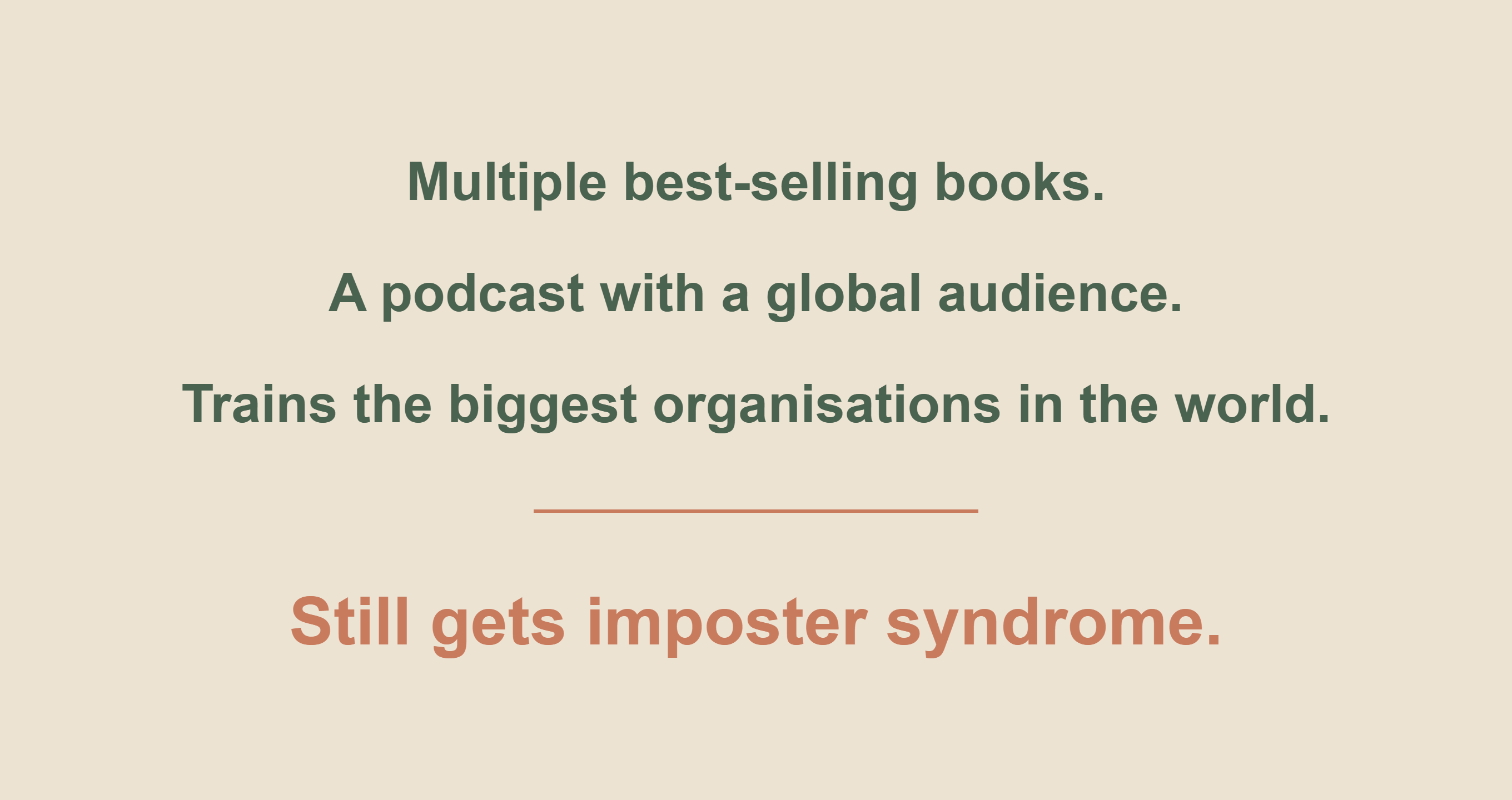
Because it's not possible to get rid of it. Look at anyone who is genuinely, wildly successful. People who have written multiple best selling books. Who host podcasts with global audiences. Who fly around the world training the biggest organisations on how to shift their thinking. Talk to enough of them and you'll find plenty who will openly admit they still have imposter syndrome. So if telling it to go away worked, don't you think someone at that level would have figured it out by now?
The reframe: imposter syndrome as your own standard checker
Here's the reframe I took from one of my coaches, and it changed how I hold this whole thing. Imposter syndrome has got a terrible name. But actually, it's a really critical part of what keeps us holding ourselves to high standards and high ethics in the work we do. If we can shine a positive light on it rather than let it be the debilitating thing that holds us in a space of fear, it becomes something else entirely. It becomes our own standard checker.
That little voice isn't there to convince you that you're a fraud. It's there to ask you a question. Is this actually true, or am I overthinking this and making more of it than it needs to be?
How to respond when the flag gets raised
Sometimes you check in with it and go back to the facts, and the facts say, actually, I do know what I'm talking about here. Thank you for raising the flag, but I'm okay.
And sometimes the flag is a valid one. Sometimes you go, you know what, you're actually right, I don't know enough about this particular topic. I need to go and do some PD. I need to go and learn more.
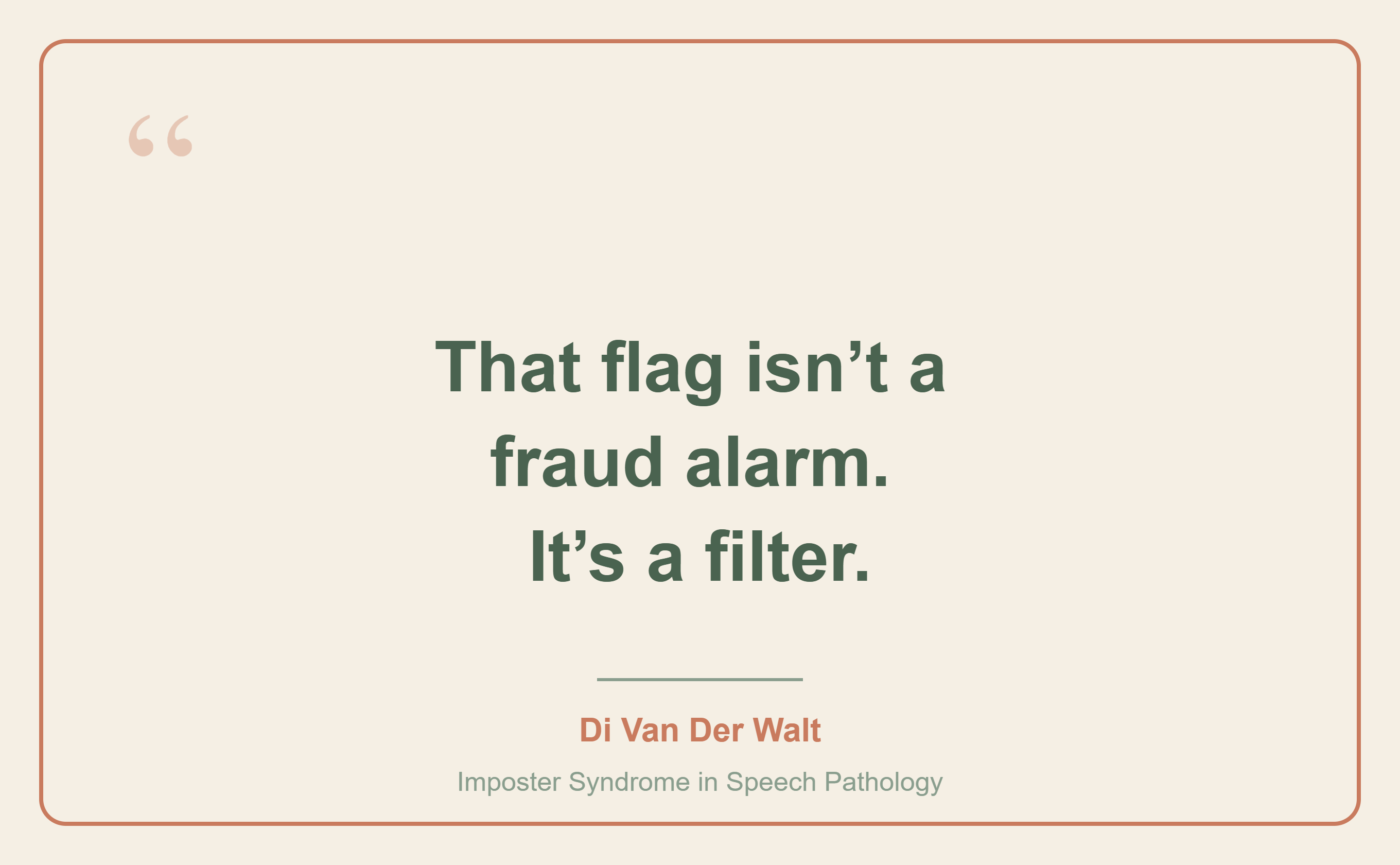
That flag isn't right or wrong. It's a filter. It helps us discern what we need to learn more about and do more of, not because we're not good enough, but because we care about doing this work properly. There will be times the flag gets raised a bit too willingly, and that's where the fact checking comes in.
Why it lingers even when you're running your own practice
One thing we also unpacked in that Therapists Haven session that I think is really, really critical. A lot of us come out of workplaces, whether that's the public system or somewhere else, where the subconscious patterning becomes "I'll take what I can get." And even once you're running your own private practice, even once cognitively you know it's yours, you get to set the standard, you get to decide, that subconscious patterning doesn't just disappear because your business card changed. It's still running in the background unless you actually notice it and do something about it.
The practical takeaway
If you're sitting with that flag being raised today, don't try to silence it. Stop and ask it what it's actually telling you. Then go back to the facts and check. Is this a genuine gap I need to fill, or is this old patterning talking? Both answers are useful. Neither one means you're a fraud.
Here's a simple exercise I gave my Therapists Haven members to build that fact checking muscle. Every day, write down three things you are good at. That's it. Five minutes max, and it doesn't need to be fancy. A Post-it note is fine.
They can be the same three things every day for a week if that's all you can think of. It doesn't have to be three new things each time. The practice itself is what matters, because it trains your brain to subconsciously start tuning in more to the things you are actually good at.
It works best right before bed, because that becomes the last thing your brain consciously focuses on, which means it settles deeper into your subconscious while you sleep.
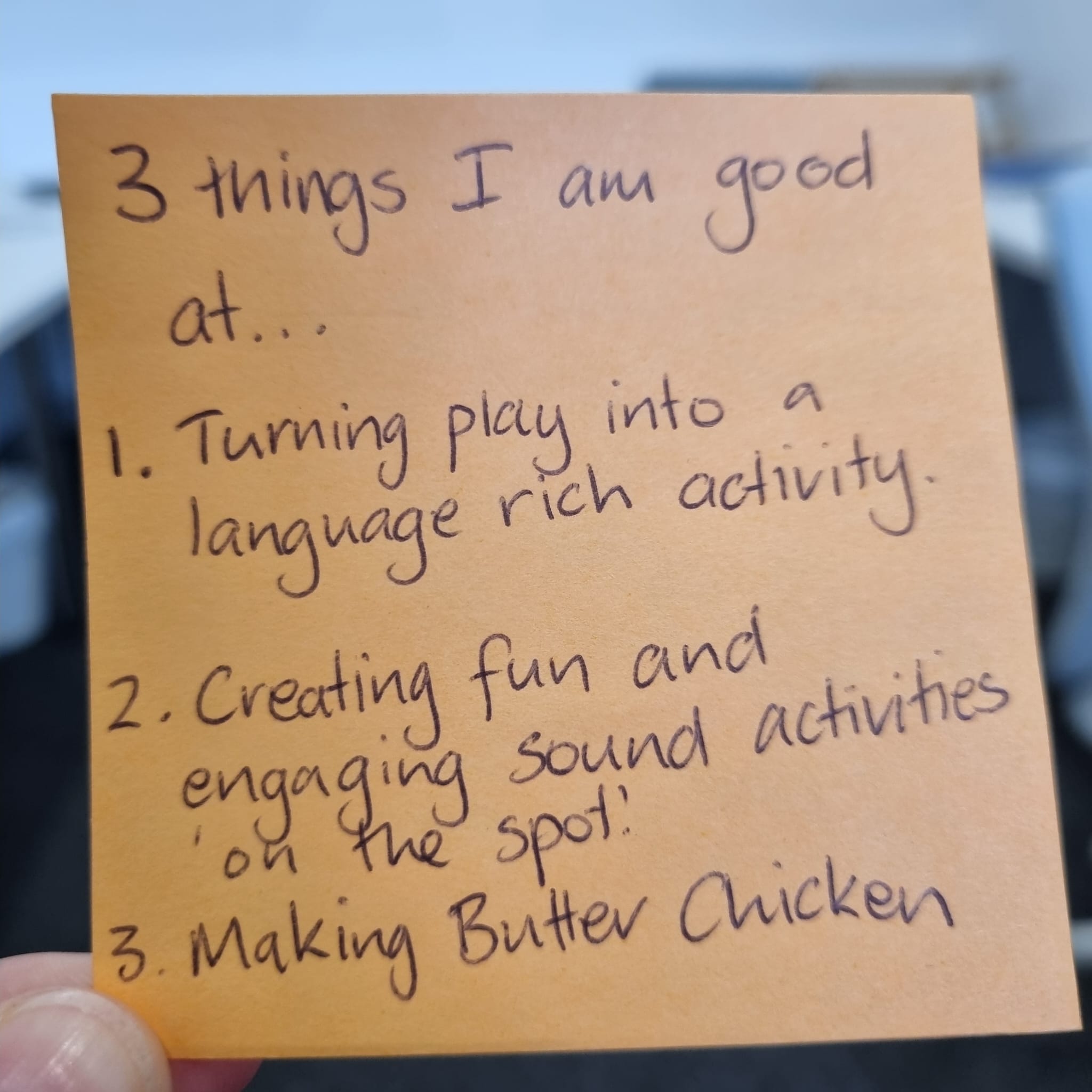
Here's an example of what this can look like. No fancy journal, just three things, one being a clinical strength and one being, well, butter chicken. It doesn't need to be serious to work.
Frequently asked questions
Does imposter syndrome in speech pathology go away with experience?
Not entirely. Speech pathologists with decades of experience, including those regarded as leaders in the field, continue to report feeling it. Experience tends to change how you respond to it, not whether it shows up at all.
Is imposter syndrome the same as being underqualified?
No. Imposter syndrome is a subjective feeling of self doubt, not an accurate measure of competence. The useful move is to fact check the feeling against real evidence of your skills and experience, rather than assuming the feeling itself is proof of anything.
Should speech pathologists try to eliminate imposter syndrome?
Trying to eliminate it outright tends not to work, and can leave a person feeling like they are failing at that too. A more workable approach is to treat it as a signal worth pausing on and fact checking, rather than a problem to be permanently silenced.
Why do speech pathologists in private practice still experience imposter syndrome?
Many speech pathologists move into private practice from workplaces with more rigid hierarchies, and the subconscious patterning formed there, such as "I'll take what I can get," doesn't automatically update once someone is running their own business. It often takes conscious noticing and reflection to shift.
What is a simple daily exercise for imposter syndrome?
Write down three things you are good at, every day, for five minutes or less. A Post-it note is enough, no fancy journal required. The three things can repeat day to day if that's all that comes to mind. Doing this consistently, ideally right before bed, trains the brain to tune in more readily to genuine strengths rather than defaulting to self doubt.
